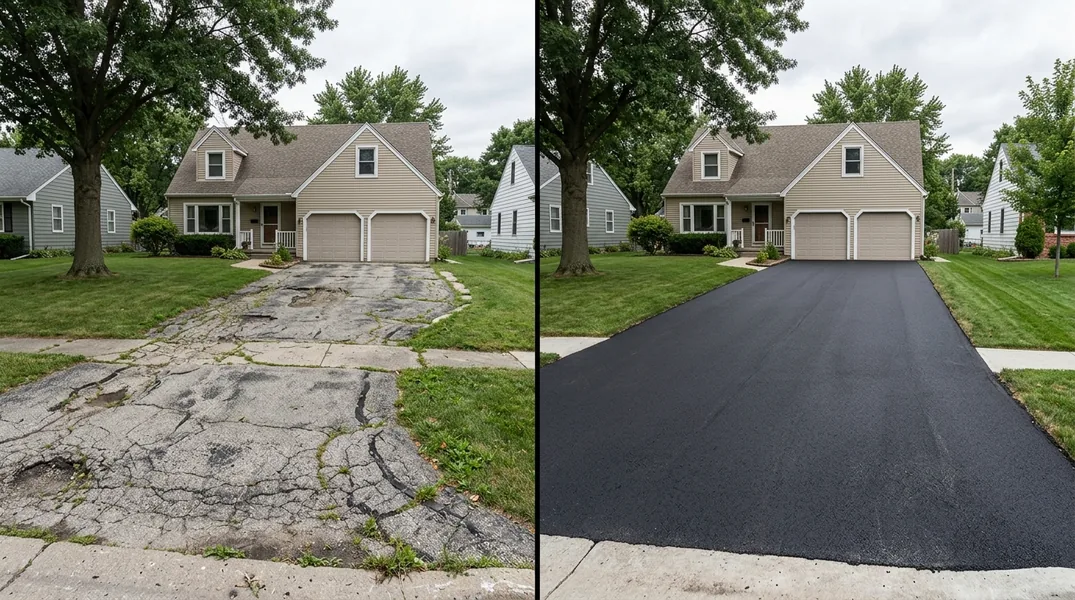
Understanding Iowa's Unique Soil Challenge
If you own a driveway in Iowa City, you've likely noticed something frustrating: your asphalt seems to deteriorate faster than driveways in other parts of the country. The culprit isn't just winter weather or heavy traffic. It's the soil beneath your driveway.
Johnson County sits on two particularly problematic soil types: loess and glacial till. Loess is a fine, silty sediment deposited by wind during the last Ice Age, while glacial till is a dense mixture of clay, sand, and rock left behind by retreating glaciers. Both soils have a critical weakness: they absorb and retain water exceptionally well. When that water freezes during Iowa's brutal winters, it expands with tremendous force, pushing upward on your asphalt and creating the conditions for severe structural damage.
This geological reality means homeowners across Iowa City and surrounding areas face driveway challenges that simply don't affect properties built on better-draining soils. Understanding this foundation problem is the first step toward making smart decisions about your driveway's future.
Frost Heave: The Silent Destroyer of Asphalt Driveways
Frost heave is the primary mechanism by which loess and glacial till destroy driveways across Johnson County. The process is straightforward but devastating. During fall and winter, water from rain, snow melt, and groundwater seeps into the soil beneath your asphalt. When temperatures drop below freezing, this moisture turns to ice. Ice occupies roughly nine percent more volume than liquid water, so it expands violently. This expansion pushes the soil upward, which in turn lifts your driveway unevenly.
The damage doesn't stop when the ice melts in spring. As the ground thaws, it settles unevenly, leaving some sections of your driveway higher or lower than others. This creates stress points where the asphalt cracks. Water then seeps into those cracks, freezes again the following winter, and the cycle repeats. Year after year, frost heave cracks widen and multiply. What started as a minor surface fissure becomes a network of structural damage that compromises the entire driveway.
Homeowners often don't realize frost heave is occurring until they see visible signs: cracks radiating from a central point, sections of asphalt that have lifted or sunk relative to their neighbors, or a driveway surface that feels uneven under your tires. By the time these symptoms appear, significant damage has usually already occurred beneath the surface.
Potholes and Cracking: Why Johnson County Driveways Fail Fast
Once frost heave creates cracks in your asphalt, potholes aren't far behind. Water enters the cracks and weakens the base layer beneath the asphalt. Each freeze-thaw cycle further erodes this foundation. Eventually, the asphalt surface collapses inward, creating the characteristic bowl-shaped pothole. In Johnson County, this progression often happens faster than in regions with more stable soil because our loess and glacial till soils provide poor support once they become saturated.
The pattern of cracking you see on many Iowa City driveways reflects this underlying instability. You might notice alligator cracking (a pattern resembling alligator skin), linear cracks running parallel to the driveway edges, or block cracking that divides the surface into irregular sections. Each type signals different stress patterns, but all indicate that frost heave and moisture damage are at work.
What makes this particularly challenging is that the damage starts below the surface. By the time you notice cracks or potholes, the subgrade beneath your asphalt has already been compromised. This is why a simple asphalt patch might look good initially but often fails within one or two more winters. The underlying soil problem remains unaddressed.
Pothole Repair & Asphalt Patching: When It Works and When It Doesn't
Pothole Repair & Asphalt Patching can be an effective solution, but only if the underlying damage is limited. If you have one or two isolated potholes and the surrounding asphalt is still in reasonably good condition, patching makes sense economically. A quality patch involves cleaning out the damaged area, repairing or stabilizing the base layer, and filling with fresh asphalt that's properly compacted and sealed.
However, patching becomes less cost-effective once frost heave damage spreads across your driveway. If you're seeing cracks in multiple areas, potholes appearing in different locations, or evidence of significant settling, patching individual spots is like treating symptoms without addressing the disease. The frost heave cycle will continue, and new damage will develop elsewhere on your driveway within months.
Iowa City Asphalt Paving recommends evaluating the extent of damage before committing to repairs. A driveway with damage covering more than thirty percent of its surface, or showing signs of widespread frost heave, is usually a candidate for more comprehensive solutions. That's when you need to consider whether Driveway Repair through patching or Asphalt Driveway Paving & Installation is the better investment.
Repair or Replace Your Asphalt Driveway: Making the Right Choice
The decision between repairing and replacing your driveway depends on several factors specific to your situation and the extent of frost heave damage. A driveway that's five to seven years old with isolated damage in one or two spots is usually worth repairing. A driveway that's fifteen years old with widespread cracking, multiple potholes, and visible settling is almost always a candidate for replacement.
Consider the long-term cost picture. Patching a pothole might cost three hundred to five hundred dollars. But if you're patching the same driveway multiple times each year, you're spending money that could go toward a new surface. A complete Asphalt Driveway Paving & Installation project costs more upfront, but it provides a fresh surface with proper base preparation, improved drainage, and a warranty. Most new asphalt driveways last twelve to fifteen years with proper maintenance, giving you predictable performance and peace of mind.
There's also the option of Asphalt Resurfacing & Overlay, which falls between patching and full replacement. Resurfacing involves laying a new layer of asphalt over the existing surface. This works well if your base layer is still structurally sound but the wearing surface is damaged. It's more affordable than full replacement but more durable than patching.
The best way to determine your driveway's fate is to have a professional assessment. Iowa City Asphalt Paving can evaluate your specific situation, identify how much frost heave damage has occurred, and recommend the most cost-effective solution for your property.
Preventing Future Frost Heave Damage: Drainage and Maintenance
While you can't eliminate the frost heave risk that comes with Johnson County's loess and glacial till soils, you can significantly reduce the damage through proper drainage and maintenance. The key is keeping water away from the soil beneath your driveway. Standing water, poor drainage around the edges, and clogged gutters that dump water near your driveway all contribute to saturation and frost heave damage.
Proper grading around your driveway is essential. Water should flow away from the asphalt, not toward it. If your driveway has settled or developed low spots where water pools, those areas are prime targets for accelerated frost heave damage. Regular seal coating (every two to three years) helps keep water out of small cracks before they become serious problems. Filling cracks promptly, clearing debris from edges, and keeping gutters clean all contribute to a longer driveway lifespan.
If you're planning a new driveway installation, discuss base preparation and drainage solutions with your contractor. Proper gravel base, adequate compaction, and sometimes a drainage layer beneath the asphalt can reduce frost heave effects. These investments upfront pay dividends in driveway longevity.
Contact Iowa City Asphalt Paving for Your Driveway Assessment
If your driveway is showing signs of frost heave damage, potholes, or widespread cracking, don't wait for the problem to worsen. The longer you delay, the more expensive the eventual repair becomes. Iowa City Asphalt Paving serves homeowners throughout Johnson County and understands the unique challenges that loess and glacial till soils create for driveways.
Whether you need Pothole Repair & Asphalt Patching, a complete driveway replacement, or expert advice on repair versus replacement, our team can help. Call Iowa City Asphalt Paving at (319) 519-4420 or visit our website to request a free estimate. We'll assess your driveway's condition and provide honest recommendations tailored to your needs and budget. Don't let frost heave damage continue unchecked. Take action today to protect your property's value and safety.
Looking for a professional asphalt paving contractor in Iowa City? Iowa City Asphalt Paving responds fast for all your asphalt paving needs.
Get a Free Quote